Highly glazed designs on dwellings offer many benefits: it maximises natural daylight for health and well-being, energy efficiency, while also enhancing aesthetic appeal, visual comfort and overall market value. However, such designs can lead to increased solar gains presenting a risk of overheating, which can adversely affect both occupant comfort and safety.
Part O compliance in warmer locations requires greater passive design measures to be implemented, especially when required to use dynamic simulation. requirements. Developments in London are particularly challenged as its the hottest region and its split into 3 weather location with the central London’s climate the most demanding. We have provided a list of measures below that should be considered from planning to ensure a practicable and cost-effective strategy is determined.
- Fixed architectural shading
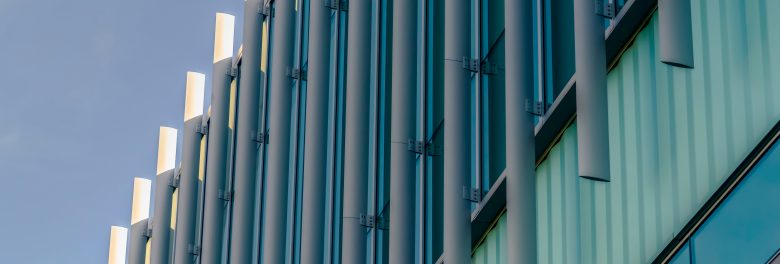
- Brise Soleil
A series of horizontal and or vertical fins reduce solar gains in the summer.
- Recessed windows
The window is set back from the plane of the wall, creating a self-shading effect from the surrounding wall structure.
- Overhangs/balconies
Simple horizontal projections located directly above a window. They are highly effective for blocking the high-angle summer sun.
- Dynamic and operable systems
- External shutters, blinds and screens
Heavy-duty roller, sliding or folding systems made of interlocking slats (metal or plastic) that provide maximum security, black-out, and thermal isolation when fully closed.
- Awnings
Fabric or metal canopies extended outwards from the facade. They can be fixed, retractable (manual or motorised), or cantilevered.
- Window design
- Maximise window openings for natural ventilation and avoid fixed panes.
- Ensure windows can be opened to their maximum extent by meeting Part O criteria (sill and transom heights above 1100mm from FFL).
- Low g-values reduce solar energy transmittance.
- Inward opening windows provide greater natural ventilation.
Posted on January 29th, 2026
Author: Vince Shapland